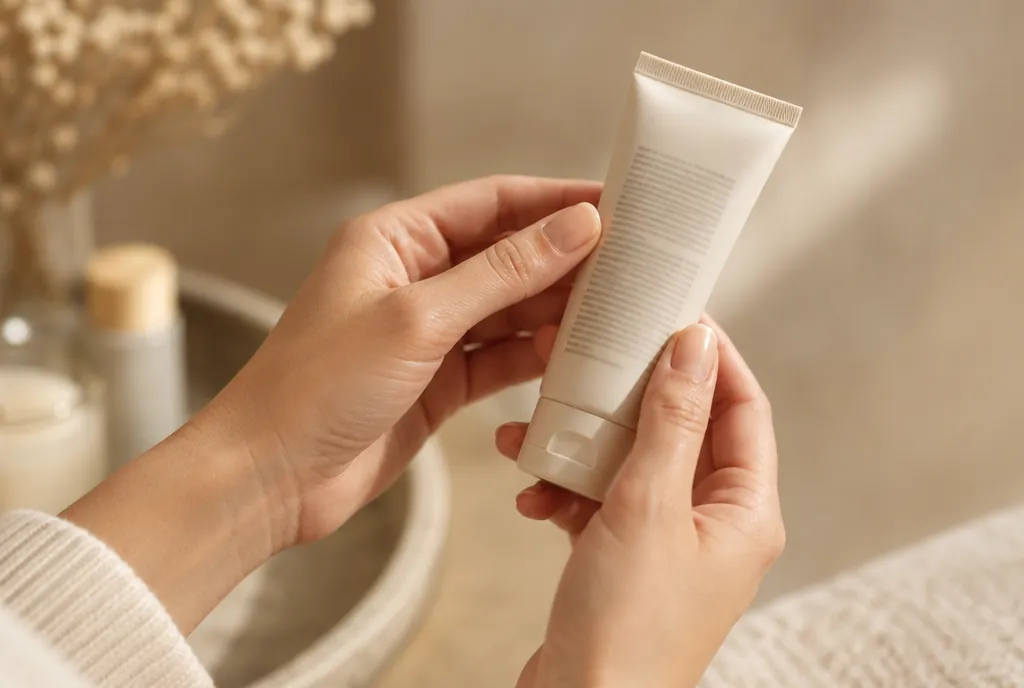
Every cosmetic sold in the UK must list its ingredients using INCI names — the International Nomenclature of Cosmetic Ingredients. The list looks intimidating, but for a lash serum you only need four checks.
Check 1: the order tells you the dose
Ingredients above 1% concentration must appear in descending order of weight. Below 1% they can be listed in any order. Most lash serums are over 80% water (aqua) with a humectant such as glycerin or butylene glycol straight after. That is normal.
What matters is where the active sits. Preservatives such as phenoxyethanol are almost always used at or below 1%. If the peptide you are paying for appears after phenoxyethanol, it is present at a trace level.
Check 2: name the active
| Look for | What it is |
|---|---|
| Myristoyl pentapeptide-17, myristoyl hexapeptide-16 | Peptides used in lash conditioning formulas |
| Acetyl tetrapeptide-3 | Peptide often paired with red clover extract |
| Panthenol | Pro-vitamin B5, flexibility and moisture |
| Biotin, arginine, L-proline | Protein building blocks |
| Isopropyl cloprostenate, ethyl tafluprostamide | Synthetic prostaglandin-like ingredients — use with caution |
Check 3: what you do not want near your eye
- Parfum / fragrance — unnecessary in an eye-area product and a common trigger for stinging.
- High levels of alcohol denat. — can dry the lash line.
- Heavy oils if you wear extensions — they weaken adhesive (see serums with extensions).
Check 4: is the list complete?
A reputable brand publishes the full INCI list on its website and on the outer pack. If you can only find “key ingredients” or a marketing list of botanical names, you cannot judge what you are putting on your eyelids. Missing disclosure costs a product points in our ranking.
Worked example
A typical conditioning serum might read: Aqua, Glycerin, Butylene Glycol, Panthenol, Hydroxyethylcellulose, Myristoyl Pentapeptide-17, Biotin, Sodium Hyaluronate, Phenoxyethanol, Ethylhexylglycerin.
Reading it: water base, humectants, panthenol at a meaningful level, a thickener, then the peptide before the preservative — a good sign. No fragrance, no oils, no prostaglandin-like names. That takes about ninety seconds once you know what to look for.